



Glutamate Dehydrogenase (GLDH)
Glutamate Dehydrogenase
Glutamate Dehydrogenase (GLDH, GDH) is a mitochondrial enzyme that converts glutamate into α-ketoglutarate in the tricarboxylic acid (TCA) cycle, which is a series of ATP-synthesis metabolic reactions. GLUD1 and GLUD2 encode two glutamate dehydrogenase isoenzymes. GLUD1 is a housekeeping gene widely expressed in human tissues, including liver, kidney, pancreatic β-cells, brain, heart, intestine, spleen, skin, lymph nodes, leukocytes, fibroblasts, and placenta. GLUD2 is predominantly expressed in retina, brain, and testicular tissue in humans. In testicular tissue, GDH2 is highly expressed in Sertoli cells and to some extent in Leydig cells, while spermatogonia and differentiated germ cells are negative for this protein. In cerebral cortex, the expression of GDH2 is restricted to astrocytes, with neurons showing only faint immunoreactivity. Human liver does not express endogenous GDH2[1].
References:
All Product Categories
-
Glutamate Dehydrogenase (GLDH) Related Products (11)
Related Products (11)

- 1
-
R162
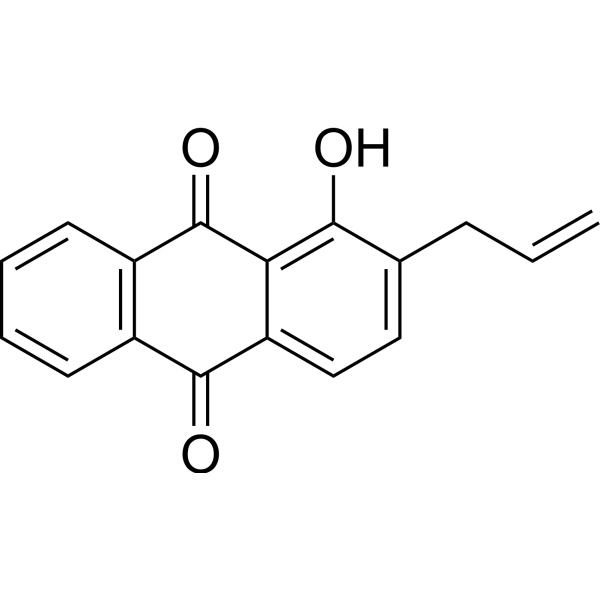 0 ImagesR162 is a potent inhibitor of glutamate dehydrogenase 1 (GDH1/GLUD1), with anti-cancer properties.
-
Nicotinamide 1,N6-ethenoadenine dinucleotide
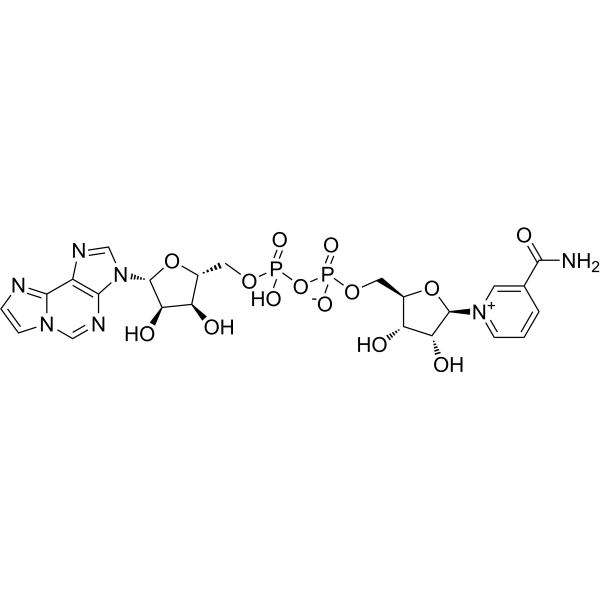 0 ImagesSynonyms: ε-NADNicotinamide 1,N6-ethenoadenine dinucleotide (ε-NAD) is a fluorescent analog of NAD. Nicotinamide 1,N6-ethenoadenine dinucleotide can be cleaved by phosphodiesterase I (from C. adamanteus venom) and binds to bovine liver glutamate dehydrogenase. Nicotinamide 1,N6-ethenoadenine dinucleotide can serve as a substrate for G-ADP ribosylation of G proteins catalyzed by bacterial toxins. Nicotinamide 1,N6-ethenoadenine dinucleotide can be used as a fluorescent substrate for the study of ADP ribosylation reactions.
-
SIRT4-IN-1
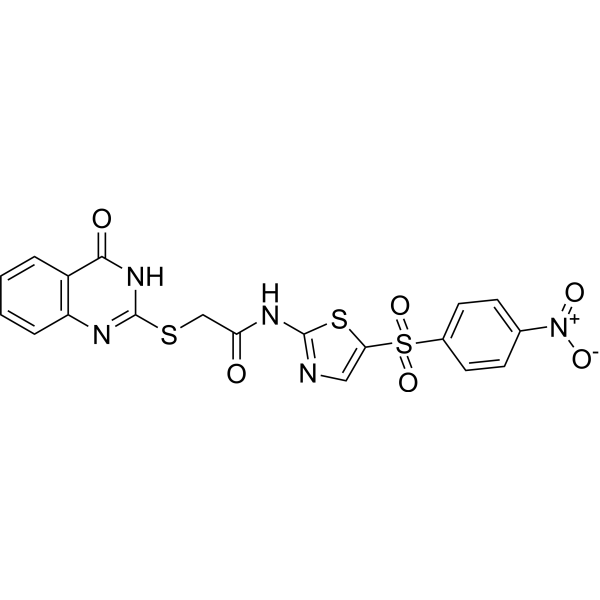 0 ImagesSIRT4-IN-1 is a selective and potent Sirtuin 4 (Sirt4) inhibitor with an IC50 of 16 μM for hSirt4. SIRT4-IN-1 also inhibits hSirt1, hSirt2, hSirt3, hSirt4 and hSirt6. SIRT4-IN-1 competes with acyl peptide substrate for Sirt4's acyl binding site, and is noncompetitive with NAD+. SIRT4-IN-1 increases glutamate dehydrogenase (GDH) activity and rescues pyruvate dehydrogenase (PDH) activity. SIRT4-IN-1 inhibits adipocyte differentiation and suppresses Sirt4 overexpression-induced increased differentiation. SIRT4-IN-1 can be used for the researches of cancer and metabolic disease.
-
Glutamate dehydrogenase (NADP)
 0 ImagesGlutamate dehydrogenase (NADP) is the catalytic enzyme for glutamate production. Dysfunction of Glutamate dehydrogenase (NADP) may induce various neurodegenerative diseases, such as Parkinson's disease, epilepsy, Alzheimer's disease, schizophrenia, and frontotemporal dementia. Glutamate dehydrogenase (NADP) can be used in research on neurological diseases such as Parkinson's disease, epilepsy, and Alzheimer's disease.
-
Protoveratrine A
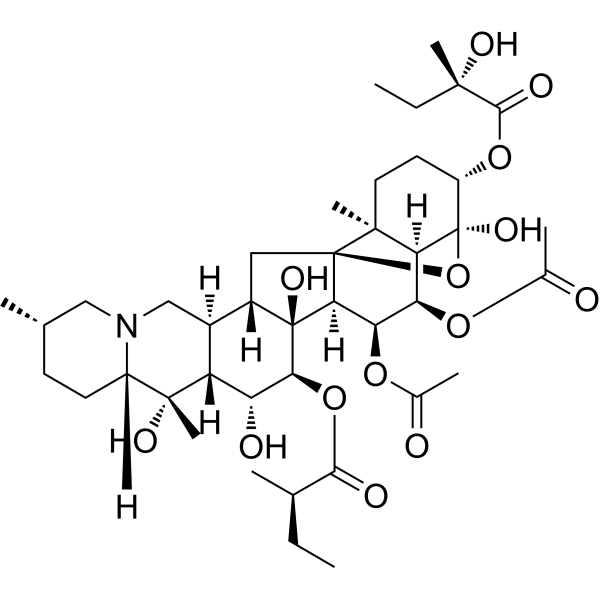 0 ImagesProtoveratrine A (NSC 7526; Protalba; Protoveratrin) is an alkaloid with strong cardiostimulant and vasoconstrictive effects, which can be used in the study of hypertension and other cardiovascular diseases.
-
2-Azido-NAD
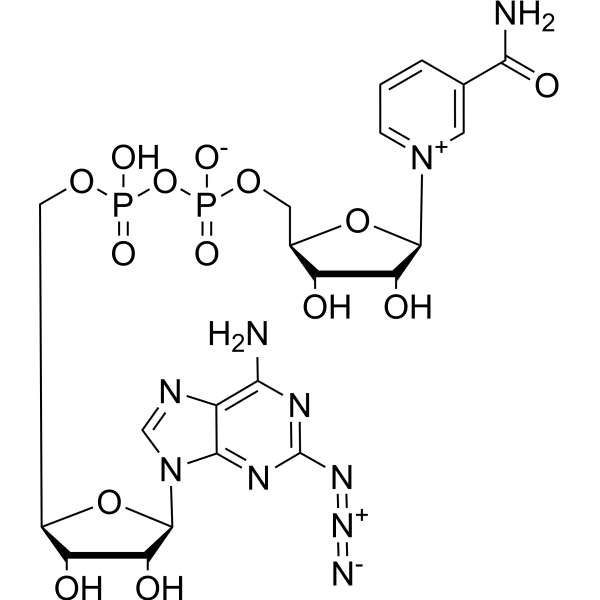 0 ImagesCat. No.: HY-E70238CAS No.: 126609-61-8Synonyms: Nicotinamide 2-azidoadenine dinucleotide2-Azido-NAD is a NAD+ analog that can be used for visualization of intracellular Poly(ADP ribos)ylation (PARylation) processes.

-
TNP-GTP tetrasodium
 0 ImagesCat. No.: HY-137609ASynonyms: TNP-Guanosine 5'-triphosphate tetrasodiumTNP-GTP tetrasodium is a fluorescently labeled GTP (HY-113225) derivative. TNP-GTP tetrasodium can inhibit glutamate dehydrogenase (Ki = 2.7 μM). TNP-GTP tetrasodium is an antagonist of the purinergic P2X2 and P2X2/3 receptors with IC50 values of 0.4 and 1.2 nM, respectively. TNP-GTP tetrasodium also inhibit rat soluble guanylyl cyclase (Ki = 11 nM).
-
Glutamate Dehydrogenase (NADP-dependent), Proteus sp.
 0 ImagesCat. No.: HY-P2912AGlutamate Dehydrogenase (NADP-dependent), Proteus sp. (EC 1.4.1.4), is an enzyme found in the mitochondria of most microorganisms and eukaryotes that converts glutamate to α-ketoglutarate.
-
R162 (Standard)
 0 ImagesCat. No.: HY-103096RCAS No.: 64302-87-0R162 (Standard) is the analytical standard of R162 (HY-103096). This product is intended for research and analytical applications. R162 is a potent inhibitor of glutamate dehydrogenase 1 (GDH1/GLUD1), with anti-cancer properties.
-
Nicotinamide 1,N6-ethenoadenine dinucleotide (solution)
 0 ImagesCat. No.: HY-DY1108CAS No.: 38806-38-1Synonyms: ε-NAD (solution)Nicotinamide 1,N6-ethenoadenine dinucleotide (solution) (ε-NAD (solution)) is a fluorescent analog of NAD. Nicotinamide 1,N6-ethenoadenine dinucleotide can be cleaved by phosphodiesterase I (from C. adamanteus venom) and binds to bovine liver glutamate dehydrogenase. Nicotinamide 1,N6-ethenoadenine dinucleotide can serve as a substrate for G-ADP ribosylation of G proteins catalyzed by bacterial toxins. Nicotinamide 1,N6-ethenoadenine dinucleotide can be used as a fluorescent substrate for the study of ADP ribosylation reactions.
Solvent and concentration: ddH2O: 20 mM
- 1



